

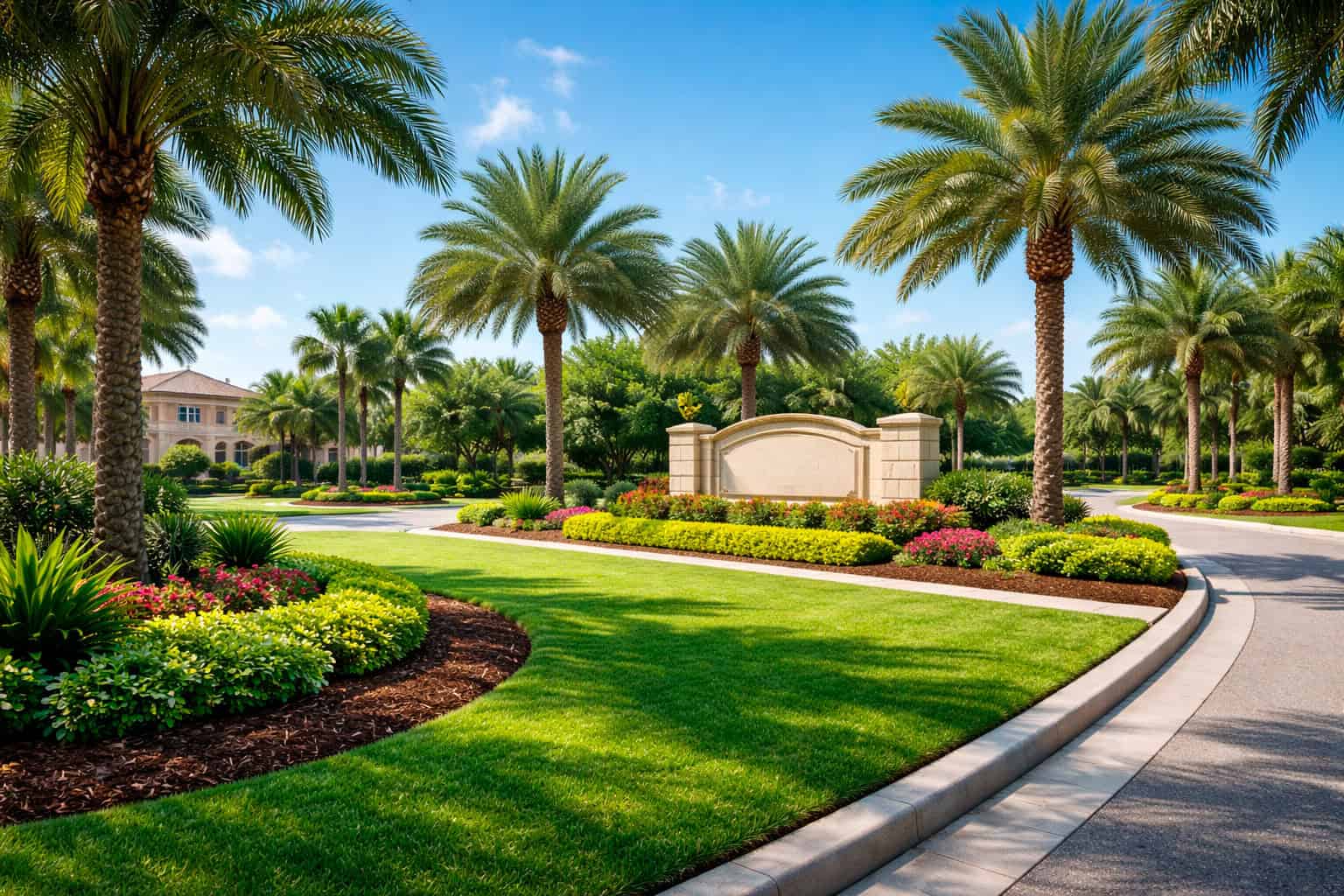
Beautiful curb appeal is the goal—lush palms, clean lines, healthy turf, and a community that looks “dialed in.” But in Palm Beach, HOA landscaping isn’t only about aesthetics. It also has to hold up to heat, rain, salty air, storm season, resident expectations, and the reality of budgets and rules. The good news: most HOA landscape problems come from a handful of repeatable mistakes, and once you know what they are, they’re easy to prevent.
Below are the 10 most common HOA landscaping mistakes in Palm Beach County—plus practical fixes your board, property manager, or landscaping vendor can implement right away.
1) Overwatering and “set-it-and-forget-it” irrigation schedules
One of the fastest ways to waste money and harm a landscape is running irrigation on a rigid schedule year-round. In Palm Beach, weather swings hard—summer rain can be intense, while winter can be dry. If the system doesn’t adapt, you’ll see runoff, soggy turf, fungus, and high water bills.
How to fix it
- Audit the system monthly: broken heads, misting nozzles, and tilted rotors add up fast.
- Adjust by season: reduce run times during rainy months; refine in cooler months when evaporation changes.
- Use zone-appropriate settings: turf zones should not water like shrub or flower-bed zones.
- Look for “hidden waste”: watering sidewalks, curbs, and streets is a common HOA leak you can actually see.
Result: healthier turf, fewer fungus outbreaks, and a budget that doesn’t get eaten by preventable water costs.
2) Ignoring drainage and grading until it becomes a crisis
Palm Beach landscaping lives under two realities: sandy soil that drains fast in some areas, and sudden downpours that flood low spots in others. When grading is off—even slightly—you’ll get standing water, mosquito issues, root rot, turf die-off, and frustrated residents.
How to fix it
- Map the problem areas: after rain, photograph pooling spots and mark them on a site plan.
- Confirm downspout flow and swales: water should move away from structures and toward drainage points.
- Use targeted solutions: French drains, catch basins, regrading, or soil amendments depending on the cause.
- Don’t “topdress and pray”: adding soil without correcting grade can make the issue worse.
Result: fewer emergency calls, fewer dead areas, and less money spent replacing plants that never had a chance.
3) Choosing the wrong plants for sun, salt, and sandy soil
In HOA communities, plant choices must look polished and stay healthy with minimal drama. The problem: many landscapes get designed like they’re in a different climate. Near-coastal areas can deal with salty air; inland communities still face intense sun, heat, and sandy soils that don’t hold nutrients well.
How to fix it
- Match plants to microclimates: sun vs. shade, coastal vs. inland, windy corners vs. protected courtyards.
- Prioritize proven performers: choose durable, Florida-friendly options that handle heat and humidity.
- Design for mature size: many HOA “overgrown” problems started with plants spaced too tightly.
- Use repetition and structure: fewer plant varieties, repeated in clean patterns, often looks more upscale.
Result: beds that stay full, consistent, and attractive—without constant replacements.
4) “Hurricane haircut” pruning on palms and shrubs
Over-pruning is one of the most visible HOA landscaping mistakes in Palm Beach. Palms get stripped down to a “hurricane cut,” shrubs get sheared into tight boxes, and the landscape looks stressed instead of premium. Worse, improper pruning can weaken palms and invite disease.
How to fix it
- Prune palms correctly: remove only dead or damaged fronds; avoid aggressive “pineapple” or “featherless” looks.
- Use selective pruning for shrubs: shaping + thinning looks more natural and keeps plants healthier.
- Time pruning smartly: avoid heavy stress pruning during extreme heat when possible.
- Make the standard visual: define a pruning style guide so every crew delivers the same look.
Result: cleaner curb appeal, healthier plants, and a community that looks intentionally designed—not overworked.
5) Skipping integrated pest management (IPM)
HOA landscapes can get hit by pests and disease quickly—especially in warm, humid conditions. The mistake is reacting late: by the time residents notice, the issue is widespread. Another common problem is blanket treatments without diagnosing the real cause.
How to fix it
- Inspect routinely: consistent scouting beats surprise outbreaks.
- Diagnose before treating: treat the problem, not the symptom.
- Improve plant health first: many “pest problems” start with overwatering, poor drainage, or nutrient imbalances.
- Track recurring hotspots: if one area keeps flaring up, it needs a root-cause solution.
Result: fewer emergencies, fewer replacements, and a healthier landscape that stays photo-ready.
6) Turf care that triggers fungus, weeds, and bare spots
HOA turf is where residents focus first—front entrances, common lawns, and visible corners. The most common turf mistakes in Palm Beach are overwatering, mowing too short, and fertilizing at the wrong time. Those issues lead to fungus, weeds, and thin areas that make a community look neglected.
How to fix it
- Mow correctly: avoid scalping; maintain a consistent height appropriate for the turf type.
- Water deeply, not constantly: frequent shallow watering encourages weak roots.
- Build a weed strategy: prevention beats constant spot-spraying.
- Repair fast: small bare spots become big problems if ignored through rainy season.
Result: greener, denser lawns that look “country club” instead of patchy.
7) Mulch mistakes that invite pests and plant stress
Mulch can make HOA beds look high-end… or messy. Too little mulch looks unfinished. Too much mulch (especially piled against trunks) can cause rot, invite pests, and stress plants.
How to fix it
- Keep mulch off trunks: no “mulch volcanoes.” Leave breathing room around the base.
- Maintain a consistent depth: enough for a clean finish, not so much that it smothers roots.
- Refresh strategically: focus on high-visibility areas first (entry, clubhouse, main boulevards).
- Choose a consistent color: uniform mulch color makes the whole community look more premium.
Result: beds that photograph well, stay neat longer, and reduce plant stress.
8) Not planning seasonal color and upgrades (so beds look tired)
Many HOA landscapes start strong and slowly fade—flower beds thin out, entry monuments look dated, and the community loses that “wow” factor. The issue is rarely a lack of effort; it’s a lack of plan. Without seasonal refreshes, even good landscaping looks stale.
How to fix it
- Create a quarterly refresh calendar: simple rotations keep beds looking intentional.
- Focus on focal points: entrance, signage, clubhouse, and main road medians deliver the biggest impact.
- Budget upgrades annually: a small yearly enhancement beats a major overhaul every 5–7 years.
- Use structure + accents: strong evergreen structure with seasonal accents looks upscale and controlled.
Result: year-round curb appeal that feels maintained—without constant overspending.
9) Poor vendor scope, weak reporting, and “invisible” accountability
One of the biggest HOA landscaping frustrations is paying for service but not seeing consistent results. Often the real issue is unclear scope: what’s included, what’s excluded, how performance is measured, and how the HOA verifies work completed.
How to fix it
- Define scope clearly: mowing frequency, edging standards, bed maintenance, palms, irrigation checks, seasonal color, and cleanup expectations.
- Require reporting: short monthly updates with photos of key areas and notes on repairs.
- Use a punch list walk-through: a simple monthly inspection with the vendor prevents drift.
- Track recurring issues: if the same spots keep failing, the plan must change.
Result: better consistency, fewer complaints, and a landscape that looks like it’s being actively managed.
10) Compliance and approval gaps (HOA rules, city rules, and resident pushback)
Even a beautiful landscape can become a headache if approvals and rules aren’t handled properly. Some communities run into issues when changes happen without HOA architectural approval, when residents disagree with removals or replacements, or when projects get done without proper documentation.
How to fix it
- Create a simple approval workflow: define who approves what and how quickly decisions are made.
- Document major changes: photos before/after, plant lists, and the reason for the change (disease, safety, visibility).
- Communicate proactively: residents complain less when they understand the plan.
- Standardize the look: when the HOA has clear landscape standards, vendors deliver better consistency.
Result: fewer surprises, smoother projects, and less resident conflict around landscape decisions.
HOA Landscaping “Fix-It” Checklist (Palm Beach)
- Irrigation: monthly inspection + seasonal schedule adjustments
- Drainage: map pooling areas + correct grading/root causes
- Plants: choose Florida-friendly options matched to microclimates
- Pruning: avoid over-pruning palms and shrub “buzz cuts”
- Pests: scout early + treat based on diagnosis, not guesses
- Turf: proper mowing height + deep watering + weed strategy
- Mulch: clean, consistent depth + keep off plant trunks
- Seasonal color: quarterly refresh plan for focal points
- Vendor accountability: clear scope + monthly photo reporting
- Approvals: simple workflow + documentation + resident communication

