

If you manage an HOA in Palm Beach County, you already know one thing: the landscape is the first impression your community makes. In South Florida, nothing sends a stronger welcome than a row of healthy, well-maintained palm trees.
Whether you are redesigning an entrance, upgrading a pool area, or standardizing your community look, choosing the right palm species can lower maintenance costs, improve safety, and keep property values high. The wrong choice, on the other hand, means constant trimming, messy fruit, and unhappy residents.
This guide breaks down the best palm trees for HOA landscaping in Palm Beach based on climate performance, hurricane resistance, maintenance needs, visual appeal, and long-term cost.
What HOAs Should Look for in Palm Trees
Before picking specific species, it helps to be clear about what actually matters in an HOA setting. Palm trees for a private home and for a 300-home community are two very different things.
1. Low Maintenance
HOA landscapers deal with dozens or even hundreds of palms. Trees that grow too fast, drop fruit constantly, or keep old boots on the trunk can drive maintenance bills through the roof. Slow to moderate growth and self-cleaning habits (palms that naturally shed old fronds) are big advantages.
2. Hurricane and Wind Resistance
Palm Beach gets its share of tropical storms. The best HOA palms have flexible trunks, deep roots, and a history of surviving strong winds. A tree that regularly snaps or uproots in storms becomes a liability instead of an asset.
3. Consistent Aesthetic
A random mix of palms can make a community look disjointed. Using a short list of species across entrances, medians, and amenity areas creates a cohesive “South Florida” feel that supports curb appeal and property values.
4. Safety and Liability
Some palms drop heavy fruit, spiky seeds, or large boots that become tripping hazards. Others attract bees or require dangerous ladder work. HOAs should favor palms that are safer to maintain and less likely to cause complaints or insurance claims.
Top Palm Trees for HOA Landscaping in Palm Beach
Below are the most reliable, attractive, and cost-efficient palms that work especially well in Palm Beach HOA communities.
1. Sabal Palm (Cabbage Palm)
Best for: Large communities, natural Florida look, low-budget maintenance
The Sabal Palm is Florida’s state tree, and it has earned that status. It tolerates heat, drought, poor soil, and strong winds with almost no drama. Once established, it needs very little irrigation and minimal care.
Because Sabals are widely available and relatively inexpensive, they are ideal for long medians, perimeter plantings, and natural areas where HOAs need dependable greenery without a premium price tag.
2. Foxtail Palm
Best for: Modern communities wanting a clean, upscale appearance
The Foxtail Palm is one of the most popular palms in Palm Beach County. Its soft, full fronds resemble a fox’s tail, and its smooth, self-cleaning trunk keeps maintenance simple.
HOAs appreciate that Foxtails look high-end without being overly fussy. They work beautifully at entrances, around clubhouses, and along main boulevards where residents and buyers form their first impression of the neighborhood.
3. Dwarf Coconut Palm
Best for: Waterfront or resort-style communities
Nothing says “tropical Florida” like a coconut palm leaning over water. For HOAs, dwarf coconut varieties are the smarter choice. They stay shorter, produce less risky fruit, and are easier to maintain than standard tall coconuts.
Planted near lakes, pools, or coastal homes, dwarf coconuts create a vacation feel that residents love while reducing the liability of heavy coconuts falling near sidewalks or parking spaces.
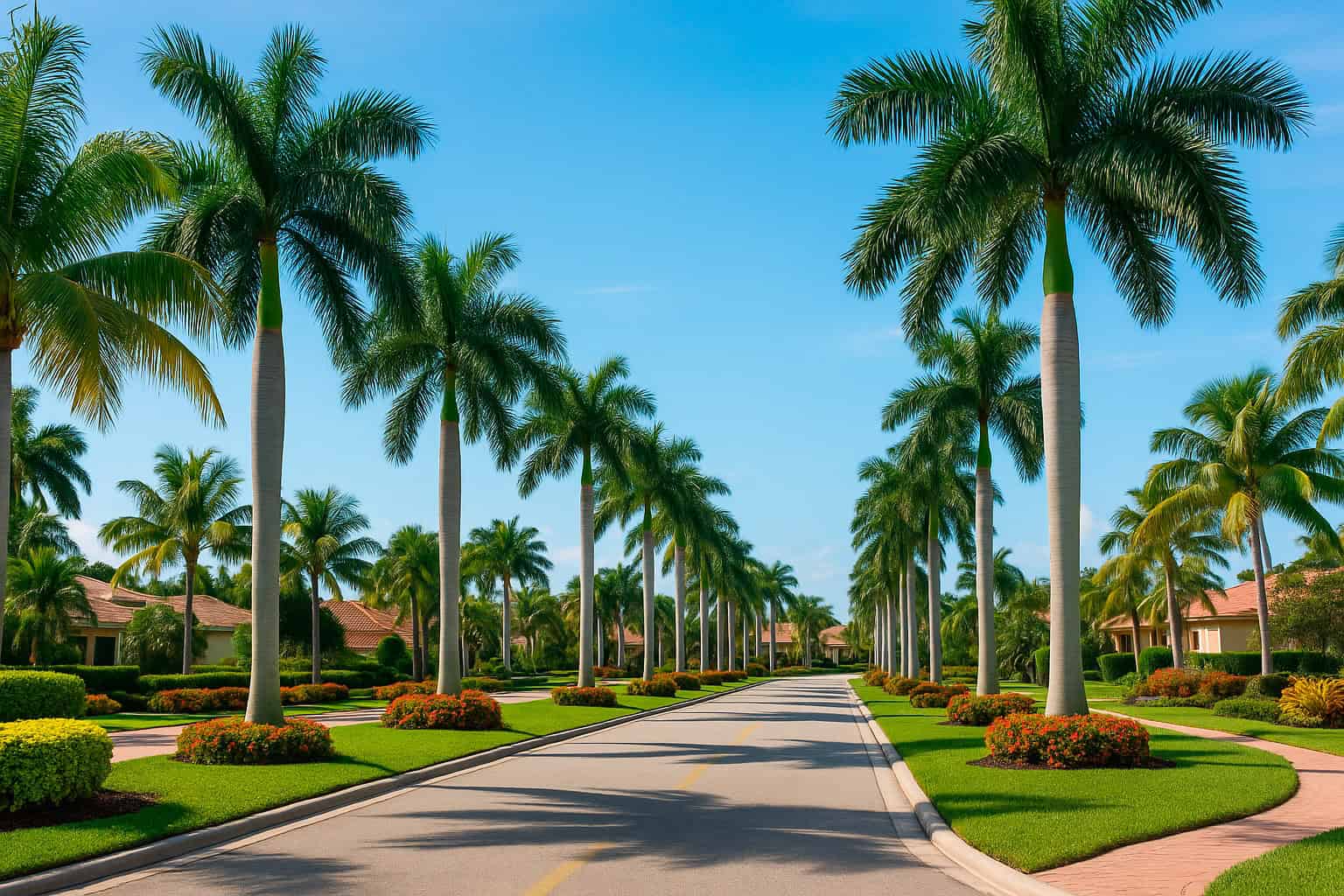
4. Royal Palm (Roystonea)
Best for: Grand entrances and luxury communities
The Royal Palm is the showpiece of many high-end Palm Beach neighborhoods. With its tall, straight trunk, smooth gray bark, and bright green crown shaft, it creates an instant sense of prestige.
Royals cost more to purchase and install, but used correctly—often lining a main entrance drive or framing a clubhouse—they dramatically upgrade the perceived value of a community.
5. Areca Palm
Best for: Privacy screens and soft borders
Technically a clustering palm rather than a single-trunk tree, the Areca Palm is extremely useful in HOA landscaping. It grows dense and lush, making it perfect for hiding pool equipment, fences, or the back of neighboring buildings.
Residents like the soft, feathery fronds, and managers appreciate that Arecas provide fast privacy without the harsh look of a solid fence. Regular trimming keeps them tidy and within height guidelines.
6. Bismarck Palm
Best for: Dramatic focal points
The silver-blue Bismarck Palm is one of the most striking palms available. Its huge, fan-shaped fronds and bold trunk turn any entrance island or roundabout into a feature.
Bismarcks are drought-tolerant and strong, but they need space. HOAs usually plant them where they can stand alone—such as at entrances, near monument signs, or in large feature beds—so the canopy can fully develop without crowding walkways or buildings.
7. Christmas Palm (Adonidia)
Best for: Smaller common areas and walkways
The Christmas Palm stays relatively compact, which makes it ideal for tight HOA spaces where a Royal or Bismarck would be overwhelming. Many landscapers plant them in groups of three for a balanced, resort-style look.
They produce decorative red berries in the cooler months, adding seasonal color. Around pools, courtyards, and front entries, Christmas Palms offer a polished tropical feel without requiring large planting beds or tall lifts for pruning.
How Many Palm Trees Does an HOA Really Need?
There is no magic number, but many Palm Beach HOAs follow a few practical patterns:
- Entrances: 3–9 large signature palms such as Royals, Foxtails, or Bismarcks
- Medians: Repeating rows of Sabal or Foxtail palms for a strong rhythm
- Pool and amenity areas: Dwarf coconuts, Christmas palms, and Arecas for shade and privacy
- Perimeter and screening: Sabals and Arecas to soften fences and hide service areas
The key is consistency. Choosing two or three primary species and repeating them throughout the community usually looks far more polished than planting a different palm on every corner.
Palm Trees HOAs Often Avoid
Some beautiful palms simply do not fit well in an HOA environment. Communities often skip these species unless there is a specific design reason to use them:
- Queen Palms: Attractive but very messy and prone to disease; require frequent trimming.
- Large Date Palms (Phoenix species): Stunning but high-maintenance, thorny, and expensive to prune safely.
- Standard tall Coconut Palms: Iconic, but the heavy coconuts can be a safety and liability concern near walkways and parking lots.
They are not “bad” palms; they just tend to generate more work orders, complaints, and risk than most HOAs want.
Typical Cost Ranges for Palm Installation
Exact pricing depends on size, availability, and site access, but many Palm Beach communities see approximate ranges like these:
- Sabal Palm: around $250–$450 each installed
- Foxtail Palm: around $450–$900 each installed
- Christmas Palm (triple cluster): around $600–$1,100 installed
- Royal Palm: around $1,000–$3,500 each installed
- Bismarck Palm: around $1,200–$4,000 each installed
Larger projects often bundle installation with ongoing trimming, fertilization, and storm preparation, giving HOAs more predictable annual budgets.
Final Thoughts
For HOAs in Palm Beach, the best palm trees are those that balance beauty with practicality. Species like Foxtail, Royal, Sabal, Bismarck, Dwarf Coconut, Christmas, and Areca palms create a strong visual identity while keeping maintenance and risk under control.
By standardizing your plant palette around these reliable choices, your community can enjoy a polished, tropical look that welcomes residents and buyers every time they drive through the gate.

