

Healthcare environments are changing. Clinics, rehabilitation centers, and senior care facilities are no longer judged only by the quality of their medical services—but also by how patients feel the moment they arrive. In Palm Beach, where climate, sunlight, and outdoor living are part of everyday life, landscaping has become a quiet yet powerful tool for improving patient comfort, mental health, and overall care experience.
Well-designed outdoor spaces do more than look attractive. They reduce stress, support healing, improve mobility safety, and create calmer transitions between the outside world and clinical care. For healthcare administrators and facility managers, investing in thoughtful landscape design is no longer a cosmetic decision—it’s an operational and reputational one.
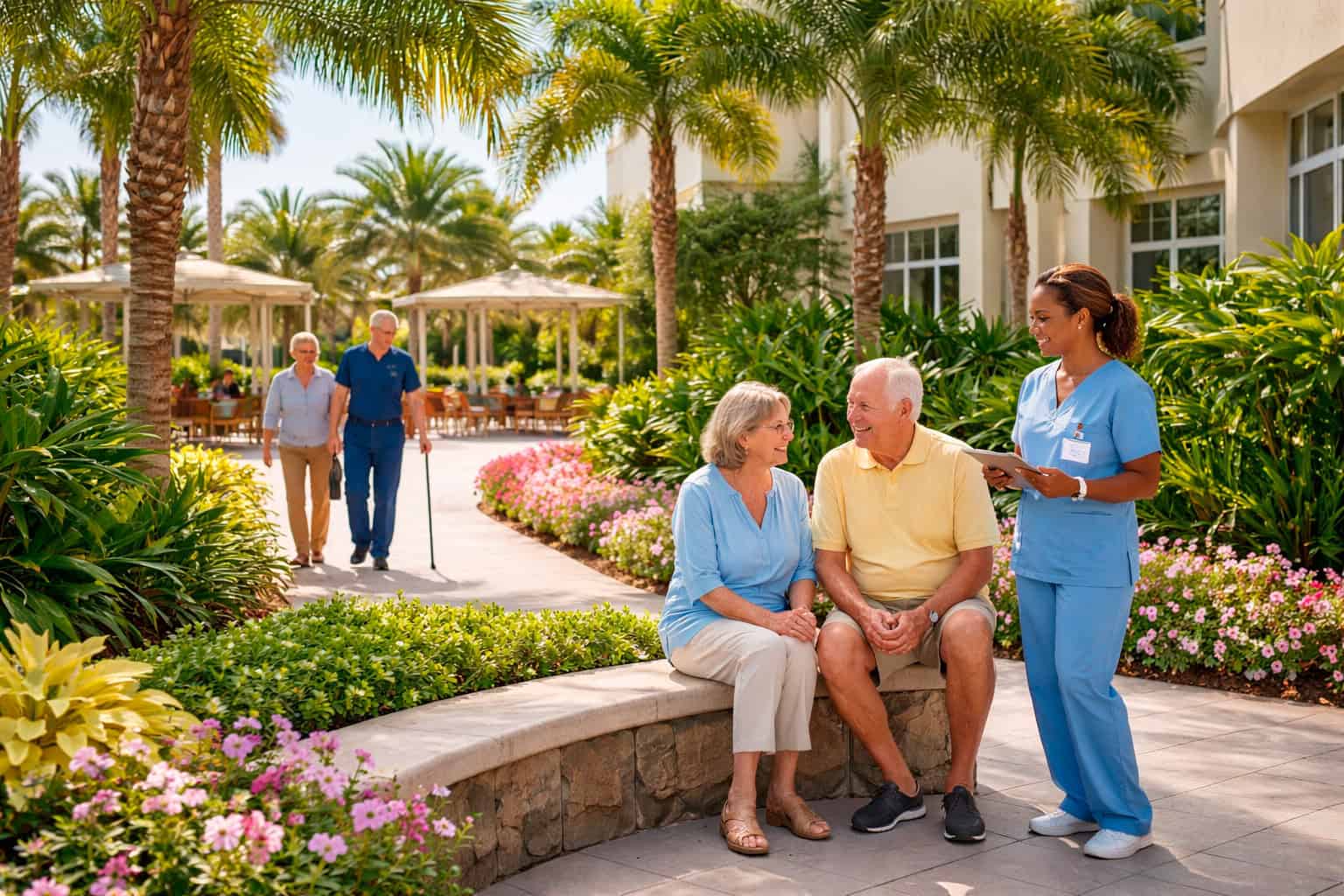
Why Outdoor Design Matters in Healthcare Settings
Stress is one of the most overlooked factors affecting patient outcomes. Whether someone is visiting a clinic for a routine appointment, undergoing rehabilitation, or living in a long-term care facility, anxiety often begins before they step inside. Parking lots, entrances, and surrounding grounds all contribute to a patient’s emotional state.
Studies consistently show that access to greenery, natural light, and quiet outdoor environments can lower cortisol levels, reduce blood pressure, and improve mood. In healthcare settings, this translates into calmer patients, better cooperation, and a more positive perception of care.
For senior care facilities, the impact is even greater. Outdoor spaces often become extensions of therapy, socialization, and daily movement. When those spaces are poorly designed—or inaccessible—they can increase isolation, fall risk, and discomfort.
Palm Beach’s Unique Environmental Considerations
Designing healthcare landscapes in South Florida requires a specialized approach. Palm Beach’s heat, humidity, seasonal storms, and intense sun exposure make generic landscaping solutions ineffective and sometimes unsafe.
Facilities throughout Palm Beach County must consider year-round usability. Shade, drainage, slip-resistant surfaces, and plant selection are not aesthetic preferences—they are essential safety and comfort elements.
A successful healthcare landscape in this region must balance durability with calmness, ensuring outdoor spaces remain functional during rainy seasons and comfortable during peak summer heat.
Designing for Seniors: Safety Without Sacrificing Beauty
Senior care centers face a delicate balance. Outdoor spaces must be safe and accessible, but they should never feel institutional. Landscaping can either empower residents or quietly discourage them from going outside altogether.
Paths should be wide, level, and clearly defined, using materials that provide traction even when wet. Gentle curves support natural movement and reduce visual confusion. Seating should be frequent and shaded, designed with armrests and appropriate seat heights to assist mobility.
At the same time, beauty matters. Flowering plants, textured greenery, and seasonal color changes stimulate the senses and encourage residents to spend more time outdoors. Even subtle elements—like the sound of palms moving in the breeze—can make a space feel intentional rather than clinical.
Clinics and Outpatient Centers: First Impressions Matter
For clinics and outpatient facilities, outdoor landscaping is often the first physical interaction a patient has with the brand. A neglected exterior can subconsciously signal neglect inside, regardless of the quality of medical care provided.
Clean, organized landscapes communicate professionalism, trust, and attention to detail. Clear walkways reduce appointment-related stress, while strategic plant placement can buffer traffic noise and enhance privacy along busy Palm Beach roads.
When patients arrive calm and oriented, interactions with staff improve naturally—creating a better experience for everyone involved.
Mental Health Benefits of Calming Outdoor Spaces
Landscaped outdoor areas play a critical role in facilities offering mental health services, rehabilitation, or physical therapy. These spaces provide a non-clinical environment where patients can decompress, reflect, or engage in light movement.
Green environments help regulate breathing, reduce sensory overload, and offer moments of control—something many patients lack during treatment. Even brief exposure to a garden courtyard or shaded walkway can significantly improve emotional well-being.
Healthcare staff benefit as well. Access to calming outdoor areas during breaks reduces burnout and improves long-term retention.
Heat, Shade, and Comfort in South Florida
In Palm Beach, shade is not optional—it is essential. Without proper shade design, outdoor spaces become unusable for much of the year. Trees, pergolas, and integrated shade structures dramatically reduce surface temperatures and improve comfort.
Plant selection also plays a vital role. Native and climate-adapted species require less water, resist pests, and maintain a healthy appearance year-round, reducing both maintenance costs and disruptions.
Effective healthcare landscaping plans for comfort in every season, not just peak tourist months.
Accessibility and ADA Considerations
Healthcare landscapes must comply with accessibility standards while remaining intuitive and welcoming. Ramps should feel like natural extensions of pathways, not afterthoughts. Signage should be clear and legible without overwhelming the environment.
Lighting is equally important. Soft, evenly distributed lighting improves visibility without glare, supporting patients with visual impairments while maintaining a calm atmosphere.
When accessibility is thoughtfully integrated, patients feel independent rather than assisted—a subtle but powerful psychological benefit.
The Business Case for Healthcare Landscaping
Well-designed outdoor spaces support more than patient comfort. They improve satisfaction scores, enhance brand perception, and reduce liability risks associated with falls or poor visibility.
Facilities that appear well-maintained externally are more attractive to prospective residents, families, and staff. In competitive healthcare markets like Palm Beach, these details influence decisions more than many administrators realize.
Unlike interior upgrades, exterior improvements are visible to everyone—making landscaping one of the most impactful investments a healthcare facility can make.
Long-Term Maintenance: Where Design Meets Reality
A beautiful landscape that is difficult to maintain quickly becomes a liability. Healthcare facilities need outdoor environments designed with longevity in mind—durable materials, controlled plant growth, and irrigation systems that adapt to weather conditions.
Professional landscape maintenance ensures walkways remain clear, plants healthy, and drainage systems functional. Consistency is especially important in healthcare environments, where patients and residents rely on predictable surroundings.
Creating Outdoor Spaces That Heal
At their best, healthcare landscapes fade into the background—not because they are unnoticed, but because they feel right. Patients breathe easier. Seniors spend more time outdoors. Staff find moments of calm in demanding workdays.
In Palm Beach, where outdoor living is woven into daily life, clinics and senior care centers have a unique opportunity to integrate nature into care itself. Thoughtful landscape design transforms unused grounds into healing assets that support recovery, dignity, and trust.

