

Palm Beach HOAs are under growing pressure from two sides. On one hand, residents want beautiful, resort-style landscapes that raise property values. On the other, Florida’s climate, water restrictions, and environmental regulations are pushing communities toward more sustainable, low-impact designs.
The good news? You don’t have to choose between compliance and conservation.
With the right planning, HOA landscaping in Palm Beach can support birds, butterflies, and pollinators while still looking polished, controlled, and fully compliant with HOA rules. In fact, wildlife-friendly landscapes often reduce maintenance costs, improve drainage, and increase long-term curb appeal.
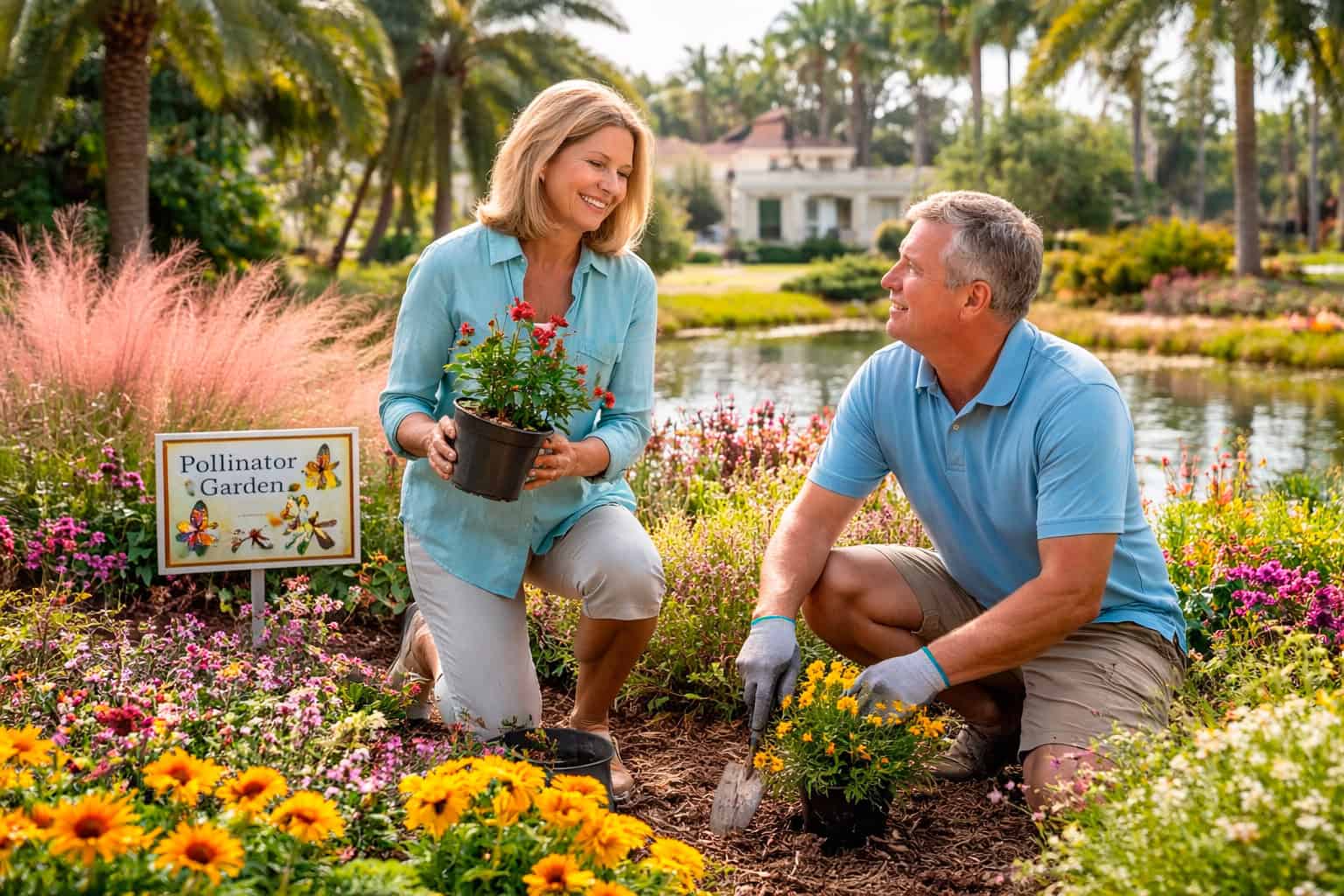
Why Wildlife-Friendly Landscaping Makes Sense for Palm Beach HOAs
Palm Beach County sits in one of the most biologically diverse regions in the United States. Native plants evolved here to survive heat, humidity, heavy rain, and sandy soils. When HOAs replace them with water-hungry turf and ornamental plants, they create landscapes that fight the environment instead of working with it.
Wildlife-friendly landscaping flips that model. Instead of forcing plants to survive, it builds landscapes that thrive naturally — using plants that support butterflies, birds, bees, and beneficial insects.
- Lower water and irrigation costs
- Less chemical use and fewer pest problems
- A more attractive, distinctive community
The Myth: “Wildlife Landscapes Look Messy”
Many HOA boards resist native and pollinator-friendly landscaping because they picture something wild, overgrown, and unkempt. That only happens when design is ignored.
A properly designed wildlife-friendly landscape is structured, layered, and intentional. It has clean edges, defined beds, and planned plant groupings — just like any high-end community landscape.
Step 1: Use Florida-Native Plants as the Backbone
Native plants are the foundation of wildlife-friendly HOA landscaping in Palm Beach. They provide nectar for pollinators, seeds for birds, and deep roots that stabilize soil.
- Firebush – Attracts hummingbirds and butterflies
- Coontie – Supports the endangered Atala butterfly
- Simpson’s Stopper – Flowers and berries for birds
- Beach Sunflower – Year-round color
- Muhly Grass – Dramatic texture and fall color
Step 2: Design With Structure, Not Chaos
Wildlife-friendly does not mean random. HOA landscapes must look deliberate and controlled using defined planting beds, edging, grouped plants, and layered heights.
When done right, native landscapes look like botanical gardens, not vacant lots.
Step 3: Replace High-Maintenance Turf With Habitat Zones
Turf grass is one of the biggest expenses in HOA landscaping. Wildlife-friendly HOAs reduce turf by adding butterfly gardens, pollinator corridors, and native plant beds.
These areas cut water use, reduce mowing, and increase visual interest while staying HOA-compliant.
Step 4: Use Mulch and Groundcovers for Weed Control
Instead of bare soil, wildlife-friendly landscapes use mulch and dense groundcovers like Sunshine Mimosa and Frogfruit to block weeds and retain moisture.
Step 5: Create Pollinator Gardens That Look Like Features
Pollinator gardens should look intentional, with defined beds, decorative borders, and seasonal color. When designed well, they become community highlights.
Step 6: Stay Fully HOA-Compliant
- Use approved plant lists
- Maintain clean edges and visibility
- Submit professional landscape plans
- Keep everything well maintained
Step 7: Reduce Pests by Attracting Nature’s Pest Control
Birds, frogs, and beneficial insects reduce mosquitoes and pests naturally, cutting down on chemical spraying.
Why This Matters for Property Values
Landscapes filled with flowers, birds, and lush native plants feel more premium and peaceful — helping Palm Beach HOAs stand out in a competitive real estate market.
Final Thoughts
Wildlife-friendly landscaping is the future of HOA landscaping in Palm Beach. When done correctly, it lowers costs, increases beauty, and supports the environment — all without breaking HOA rules.

