Hurricane season in South Florida doesn’t start with wind and rain.
It starts with planning.
Every year, Palm Beach commercial property owners and HOA boards wait until summer to think about storms. By then, contractors are booked, trees are overgrown, and small drainage issues have turned into expensive problems.
Smart property managers prepare months in advance.
If you oversee an office park, retail center, HOA, or multi-family property, your landscape plays a bigger role in storm readiness than you might realize. Poorly maintained trees, clogged drains, loose hardscape, and weak root systems can turn a tropical storm into a costly disaster.
This guide gives you a clear, practical checklist for 2026—so your property is safer, more resilient, and fully prepared before hurricane season arrives.
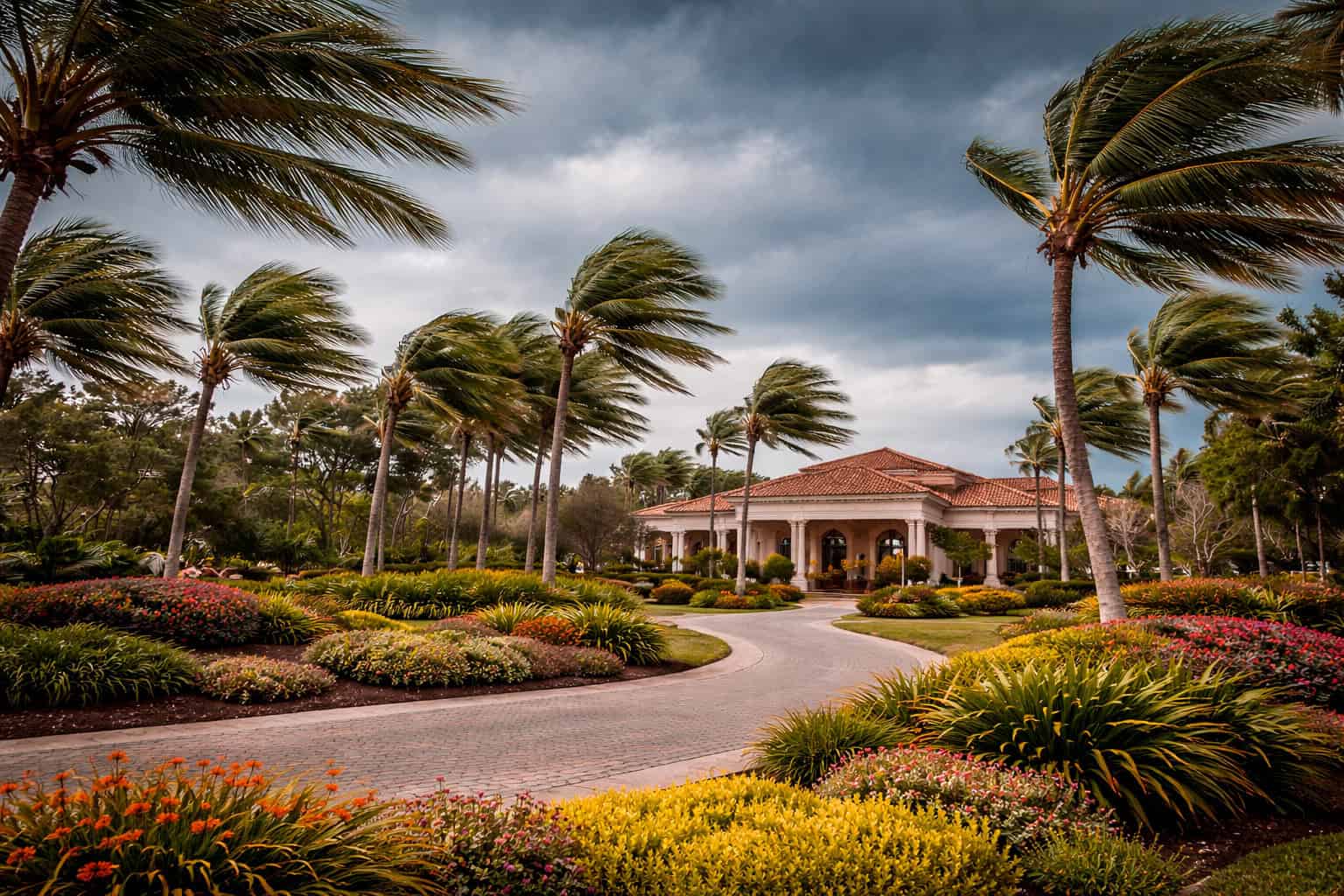
Why Landscape Preparation Matters More Than Ever in Palm Beach
Palm Beach County combines three hurricane risk factors:
- Flat terrain
- Sandy soil
- Heavy seasonal rainfall
That means water moves fast, roots shift easily, and unsecured elements become projectiles.
A well-maintained commercial landscape helps:
- Reduce flooding
- Prevent tree failures
- Protect buildings and walkways
- Lower liability risk
- Speed up post-storm recovery
In other words, landscaping is not cosmetic. It’s infrastructure.
The 2026 Commercial Landscape Hurricane Readiness Checklist
Use this step-by-step framework to evaluate your property now—before storm season puts you in reactive mode.
1. Schedule a Professional Tree Risk Assessment
Trees cause more hurricane damage than almost anything else.
Not because they’re unhealthy—but because small issues go unnoticed.
What to inspect:
- Dead or hanging branches
- Cracks in major limbs
- Leaning trunks
- Root exposure
- Dense, top-heavy canopies
Palm trees need special attention too. Overgrown fronds act like sails in high winds.
Have a certified arborist evaluate structural integrity, root stability, and canopy balance, then perform corrective pruning early in the year.
2. Prune Strategically (Not Aggressively)
More cutting does not mean more safety.
Proper hurricane pruning removes deadwood, reduces wind resistance, maintains natural shape, and preserves canopy health.
Avoid “hurricane cuts” that strip trees bare. Think balance, not brutality.
3. Inspect Drainage Systems Before the Rain Starts
Flooding often begins underground.
- Clear storm drains and catch basins
- Inspect retention areas
- Test surface runoff paths
- Check grading around buildings
- Remove debris from drainage swales
If water doesn’t flow freely now, it won’t during a storm.
4. Evaluate Irrigation Systems for Leaks and Efficiency
Irrigation problems weaken landscapes long before hurricanes arrive.
- Leaking valves
- Misaligned sprinkler heads
- Uneven coverage
- Saturated turf areas
Healthier root systems mean stronger plants when storms hit.
5. Secure Hardscape and Landscape Features
Loose landscape elements become hazards in high winds.
- Unstable pavers
- Shifting retaining walls
- Decorative stones
- Planters
- Benches
- Light fixtures
If it can move, it will.
6. Reinforce Retention Areas and Pond Edges
- Erosion along pond banks
- Failing edge treatments
- Washed-out plantings
- Sediment buildup
Stabilizing pond perimeters reduces overflow risk and protects surrounding landscapes.
7. Replace Weak Plant Material with Storm-Resistant Options
Not all plants perform equally during hurricanes.
- Simpson’s stopper
- Firebush
- Coontie
- Saw palmetto
- Silver buttonwood
Gradually transitioning vulnerable areas reduces future damage.
8. Refresh Mulch and Ground Cover
- Maintain 2–3 inches of mulch
- Keep mulch away from trunks
- Repair bare soil patches
- Reinforce erosion-prone zones
9. Review Emergency Landscape Access Routes
Ensure crews can reach drainage areas, retention ponds, fallen tree zones, and walkways quickly.
10. Create a Storm Response Landscape Plan
- Priority cleanup list
- Vendor contacts
- Debris staging areas
- Photo documentation steps
- Insurance coordination procedures
When Should Palm Beach Properties Start Preparing?
Ideally between January and April.
This allows time for inspections, pruning, drainage repairs, plant replacements, and budget approvals.
Common Mistakes Commercial Properties Make
- Waiting until June to start
- Over-pruning trees
- Ignoring drainage
- Skipping professional assessments
- Treating landscaping as cosmetic
The Business Case for Early Landscape Preparation
- Reduce insurance claims
- Prevent property damage
- Protect tenants and visitors
- Preserve curb appeal
- Maintain property value
Final Thoughts: Prepared Landscapes Recover Faster
Hurricanes are inevitable. Catastrophic damage is not.
A resilient commercial landscape is built through planning, maintenance, and smart design choices made long before storms appear.
If your Palm Beach property hasn’t been evaluated for 2026 readiness, now is the time.
Because when hurricane season arrives, preparation is no longer an option—it’s either already done, or already too late.