Most businesses don’t think twice about their parking lot — until it becomes a problem. Cracked pavement, dying plants, poor visibility, and confusing traffic flow can quietly erode customer trust before anyone ever steps inside the building.
The truth is simple: your parking lot is part of your brand experience. It’s the first and last interaction visitors have with your property, and it shapes how professional, safe, and well-managed your business feels.
Done right, parking lot landscaping does far more than look good. It improves safety, reduces long-term maintenance costs, supports stormwater management, and creates a welcoming environment that reflects positively on your organization.
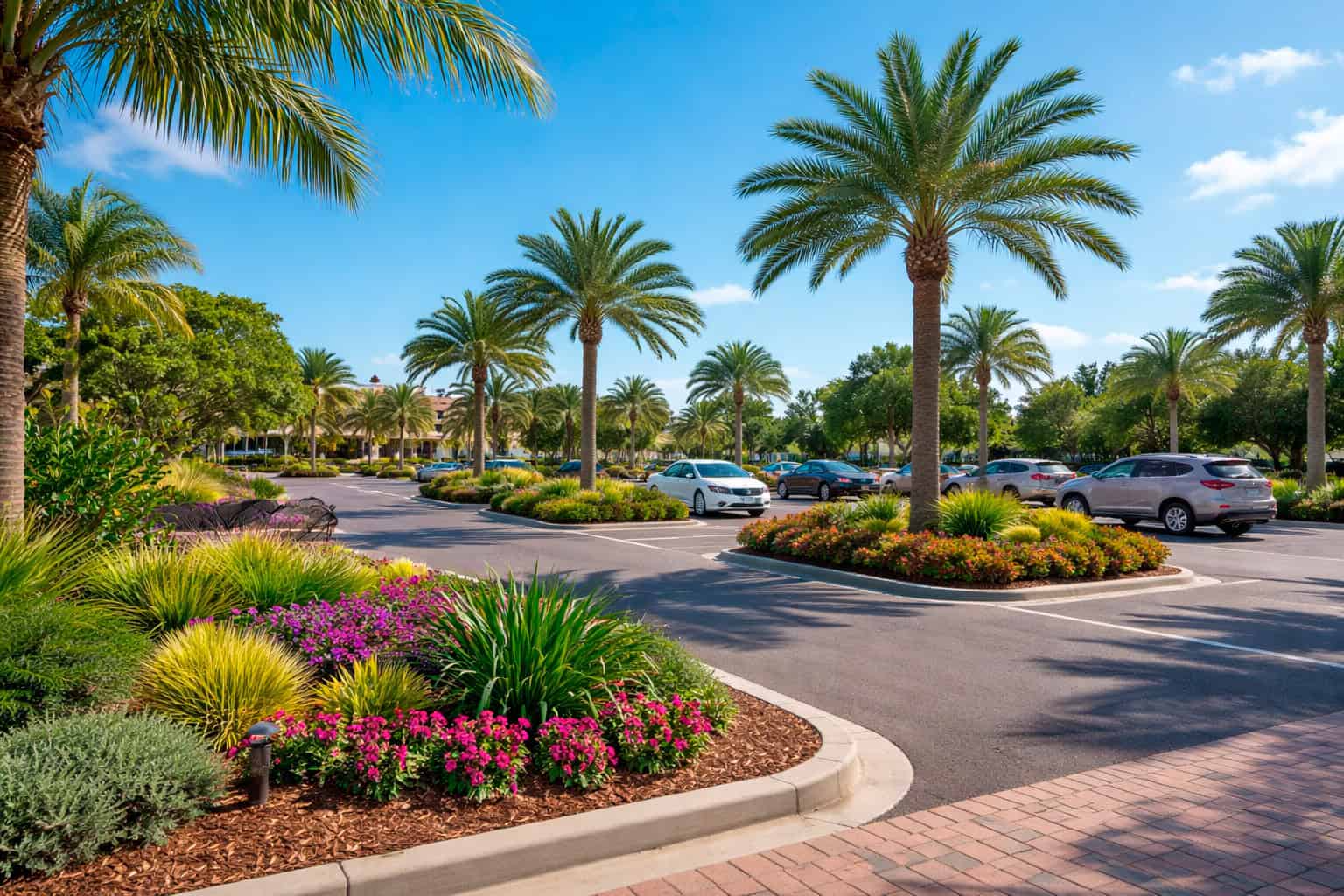
Why Parking Lot Landscaping Deserves More Attention
Parking lots are some of the harshest environments on a commercial property. Constant vehicle traffic, reflected heat from asphalt, compacted soils, exhaust fumes, and limited irrigation create conditions where weak design choices fail quickly.
When landscaping is treated as an afterthought, the result is predictable: dead turf, broken curbs, visibility issues, and rising maintenance costs. On the other hand, well-planned parking lot landscaping can dramatically improve both performance and perception.
Strategic planting helps break up large expanses of pavement, reduce heat buildup, guide traffic patterns, and manage stormwater runoff. Just as importantly, it signals care and professionalism before a visitor ever enters your building.
Start With Design, Not Plants
One of the most common mistakes in parking lot landscaping is choosing plants before understanding how the space functions. Effective parking lot landscapes begin with layout and circulation, not aesthetics alone.
A successful design accounts for vehicle movement, pedestrian paths, drainage patterns, lighting, utilities, and sightlines. Landscape islands and medians should support traffic flow and safety — not simply fill leftover space.
When design and function work together, the landscape feels intentional, performs better over time, and costs less to maintain.
Choosing Plants That Can Survive the Real World
Parking lot plants don’t receive special treatment. They endure heat, drought, salt, pollution, and foot traffic, often all at once. That’s why plant selection is one of the most critical decisions in the entire project.
Native and climate-adapted plants consistently outperform ornamental varieties because they are already suited to local conditions. These species require less water, fewer chemical inputs, and minimal intervention once established.
Trees provide shade, reduce surface temperatures, and soften large paved areas visually. However, they must be chosen carefully. Trees with aggressive roots, brittle branches, or heavy fruit drop often create safety and maintenance problems.
Shrubs and groundcovers should remain compact and predictable. Anything that grows too tall or dense can block visibility and increase liability risk.
Why Turf Grass Rarely Belongs in Parking Lot Islands
Turf grass may feel familiar, but in parking lot islands it almost always underperforms. Narrow strips of turf struggle with irrigation coverage, compacted soil, vehicle exhaust, and foot traffic.
Over time, turf islands turn patchy, muddy, and expensive to maintain. Converting turf areas to shrubs, ornamental grasses, or groundcovers reduces water usage, eliminates frequent mowing, and dramatically improves reliability.
This single change often delivers one of the highest returns on investment in parking lot landscaping.
Smarter Irrigation: Drip Beats Spray Every Time
Traditional spray irrigation systems waste water and frequently create runoff across asphalt and curbs. This excess moisture accelerates pavement damage, stains concrete, and increases utility costs.
Drip irrigation systems apply water directly to plant roots, reducing evaporation and runoff while delivering consistent moisture. In areas without irrigation, passive water capture strategies can sustain plantings naturally by directing runoff into landscape islands.
Efficient irrigation protects both your landscape and your pavement.
Safety and Visibility Are Non-Negotiable
A parking lot that looks attractive but compromises safety has failed its purpose. Landscaping must support clear visibility and predictable circulation.
Plants near entrances, intersections, and crosswalks should remain low and open. Tree canopies must be pruned high enough to allow unobstructed views for both drivers and pedestrians.
Routine maintenance is essential. Overgrown plants, fallen branches, and debris accumulation can quickly undo even the best design.
Perimeter Landscaping: Framing the Experience
Perimeter landscaping defines how your property is perceived from the street. Thoughtful buffers soften views of parked vehicles while reinforcing site boundaries.
Layered plantings that combine trees, shrubs, and groundcovers create visual depth without sacrificing security or visibility. In many jurisdictions, perimeter landscaping is required — making it an opportunity to enhance curb appeal while meeting regulations.
Maintenance Is Where Parking Lot Landscapes Succeed or Fail
Even the best parking lot landscape will fail without proper upkeep. Regular inspections and proactive care prevent small issues from becoming expensive problems.
- Pruning to preserve visibility and plant health
- Seasonal debris and leaf removal
- Irrigation system checks
- Monitoring curbs and pavement near plantings
- Replacing failed plants promptly
When landscaping and parking lot maintenance are managed together, long-term costs decrease and overall performance improves.
Environmental Benefits Beyond Appearance
Well-designed parking lot landscaping supports sustainability by slowing stormwater runoff, reducing heat island effects, and improving air quality.
Features such as landscaped islands, bioswales, and permeable planting areas help manage water responsibly while creating healthier, more comfortable environments for visitors.
Your Parking Lot Is Working Whether You Plan It or Not
Every parking lot sends a message. It can communicate care, safety, and professionalism — or neglect and risk.
By prioritizing durable plant choices, efficient irrigation, clear visibility, and consistent maintenance, your parking lot becomes an asset instead of a liability.
If your parking lot feels like the weak link in your property, it’s time to rethink the landscape — not just how it looks, but how it works.