

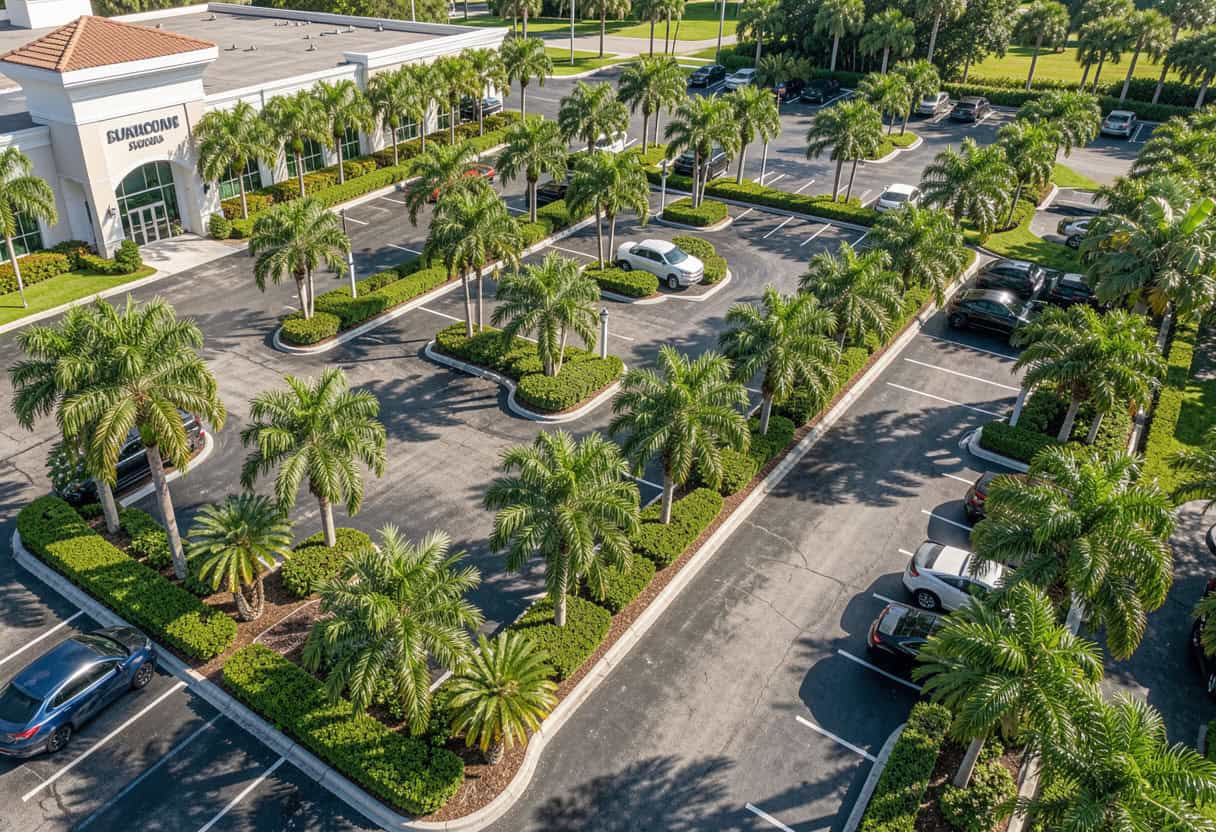
Tree trimming in Martin County is not a once-a-year task you can set and forget. Most commercial trees need structural pruning every one to five years, while shrubs and hedges often require trimming every four to eight weeks during the growing season. In South Florida’s climate, a consistent tree trimming schedule is essential for safety, appearance, and compliance on commercial and HOA properties in Martin County and Palm Beach County.
Why Regular Tree and Shrub Trimming for Commercial Properties
Regular tree trimming in Martin County goes well beyond aesthetics. It directly affects the safety, liability exposure, and long-term health of your landscape investment.
Property Appearance and First Impressions
Overgrown trees and hedges communicate neglect. Clean lines, visible entries, and well-shaped plants signal organized management and care. For more ideas, see these HOA landscaping best practices.
Safety and Liability Reduction
Florida property owners must keep premises reasonably safe for visitors. Unmanaged branches, roots, and low limbs can contribute to trips, falls, and traffic visibility issues, increasing legal exposure.
Landscape Health and Longevity
Proper pruning improves structure, airflow, and light penetration, which reduces disease and extends plant life. As a rule of thumb, avoid removing more than one-third of the canopy in a single pruning session.
Visibility and Compliance
Martin County’s landscape regulations require maintained landscape areas on commercial and multi-family sites. Regular tree trimming in Martin County keeps signage, access points, and internal intersections clear and reduces the risk of complaints or enforcement actions.
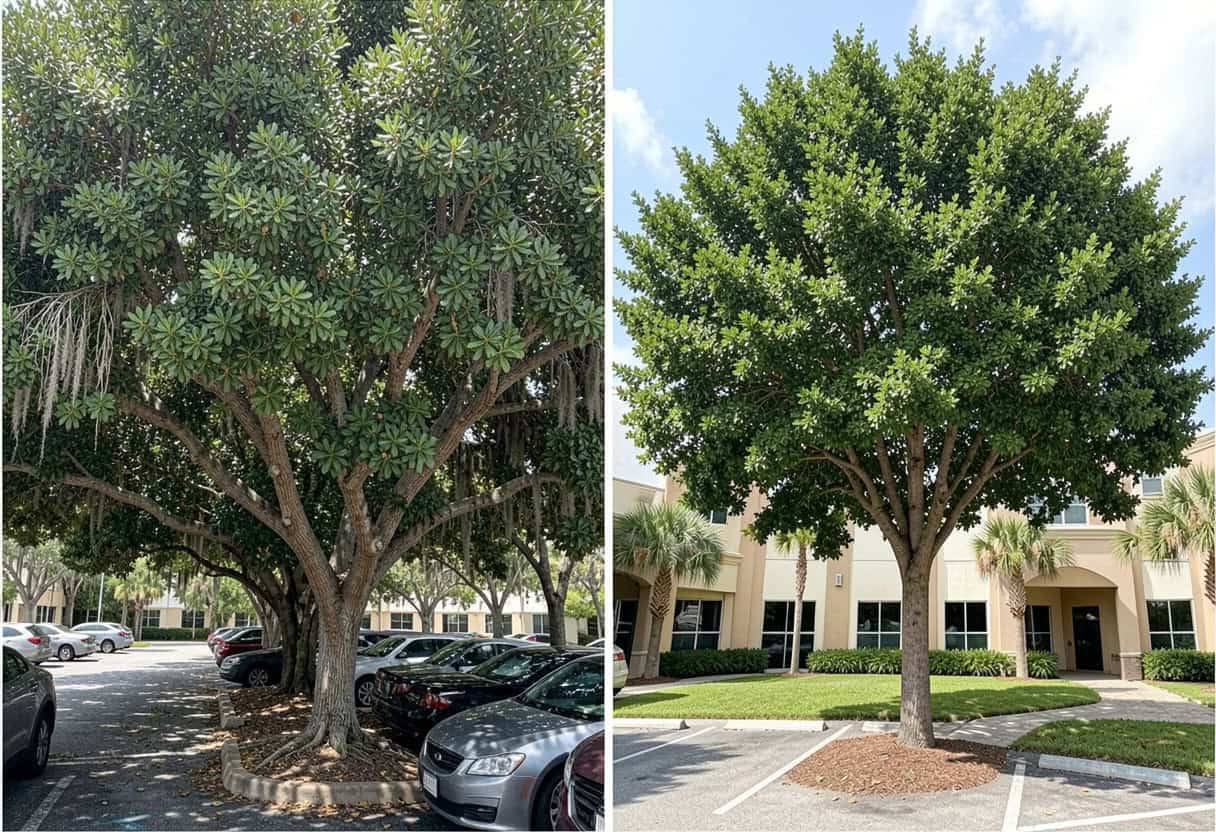
How Often Should Tree Trimming in Martin County Be Done?
The right frequency depends on species, age, and site conditions, but these guidelines work well for most commercial properties in Martin County.
| Tree Type | Recommended Trimming Frequency | Best Time to Trim | Key Notes |
| Shade Trees (Live Oak, Laurel Oak, Mahogany) | Every 3–5 years | Late winter to early spring (January–March) | Remove dead, crossing, or structurally weak limbs; avoid heavy trimming during hurricane season |
| Palm Trees (Royal, Queen, Sabal, Coconut) | 1–2 times per year | Late April through early June | Remove only brown/dead fronds; never over-cut; over-pruned palms become wind-sails in storms |
| Ornamental Trees (Crepe Myrtle, Southern Magnolia) | Every 1–3 years | After flowering cycle or early spring | Light shaping only; never top ornamental trees; selective thinning preserves natural form |
| Fast-Growing Trees (Ficus, Bottlebrush, Brazilian Pepper) | Every 6–12 months | Late winter or post-rainy season | Rapid growth rates require more frequent attention to prevent canopy conflicts with structures and signage |
| Storm-Damaged Trees | Immediately after damage | Any time as needed | Engage an ISA-certified arborist; prune no more than 25% of canopy in a single session |
Shade Trees
Live Oaks and other shade trees benefit from structural pruning every 3–5 years to reduce weight in the canopy and improve wind resistance. Young trees may need more frequent pruning to establish a strong dominant trunk and scaffold structure.
Palm Trees
Palms used on commercial properties typically require trimming one to two times per year, depending on species. The best window for palm tree trimming in Martin County is late April through early June, just before hurricane season. Avoid over-pruning or “hurricane cuts,” which weaken palms and increase stress.
Ornamental Trees
Ornamental trees like crepe myrtle respond best to light shaping every 1–3 years, ideally right after flowering so you do not remove next season’s buds. Fast‑growing species may need attention every 6–12 months to prevent conflicts with signage, sightlines, and structures. For species selection, this guide to palm trees for HOA landscapes is a useful reference.
Fast-Growing Trees
Certain commercial landscape species grow aggressively in South Florida’s climate and need pruning every six to twelve months to prevent branches from interfering with signage, walkways, lighting, and building structures.
Storm-Damaged Trees
Storm damage requires immediate assessment and corrective pruning regardless of season. Florida’s 25% canopy removal standard, adopted by multiple counties including Broward and Hillsborough, limits pruning to no more than 25% of the tree’s canopy in any single session. Exceeding this threshold without documentation from an ISA-certified arborist can trigger code violations and fines starting at $500 per tree.

Shrub and Hedge Trimming for Tree Trimming in Martin County Plans
Shrubs and hedges usually need more frequent trimming than trees, especially in the rainy season.
| Shrub/Hedge Type | Recommended Trimming Frequency | Best Season | Key Notes |
| Foundation Shrubs | Every 4–8 weeks during growing season; every 8–12 weeks in winter | Spring through fall | Prevent contact with building foundations, walls, and windows; keep mulch zones clear |
| Privacy Hedges (Clusia, Ficus, Podocarpus) | Every 3–6 weeks during growing season | Late spring through early fall | High-profile hedges may need biweekly attention to maintain formal appearance |
| Entryway Landscaping | Every 2–4 weeks during peak season | Year-round | First impressions matter; entrance beds are highest-visibility zones; prioritize tight, clean lines |
| Flowering Shrubs (Ixora, Bougainvillea, Plumbago) | After each bloom cycle; 2–3 times per year structurally | After blooming ends; late spring structural trim | Never prune before blooming; prune immediately after flowering to encourage reblooming |
| Native Shrubs (Simpson Stopper, Firebush, Beautyberry) | 2–3 times per year; light shaping as needed | Early spring; post-summer | Native species require minimal intervention; avoid over-pruning which disrupts natural form |
Foundation Shrubs
Privacy Hedges serve a functional and aesthetic purpose for HOA communities and commercial campuses. Formal hedges like Clusia or Podocarpus may need trimming every three to six weeks during the growing season to maintain a polished, uniform appearance. Most Palm Beach County commercial properties require this level of frequency during peak growth months.
Entryway Landscaping sets the tone for the entire property. Entrance beds and frontage shrubs should be maintained on the tightest schedule, with some high-visibility commercial properties requiring biweekly trimming during summer growth periods.
Flowering Shrubs operate on a bloom-driven schedule rather than a fixed calendar. Pruning too early removes flower buds and eliminates seasonal color. Instead, trim immediately after each bloom cycle ends and perform a light structural shaping in late spring.
Native Shrubs are increasingly specified in Martin County commercial landscape plans due to their drought tolerance, low maintenance requirements, and compliance with Florida-Friendly Landscaping guidelines. While native species require less frequent trimming, annual light shaping in early spring promotes healthy structure and appearance. Explore the top native and drought-resistant plants for Palm Beach HOAs for species selection guidance.

Seasonal Guide to Tree Trimming in Martin County
Spring (February–April): Prime Maintenance Season
Spring is the key window for tree trimming in Martin County:
-
Complete structural pruning of trees before hurricane season.
- Rejuvenate overgrown shrubs and re‑set hedge lines.
-
Prepare entrances and high‑visibility zones ahead of rapid summer growth.
For a broader HOA planning framework, see From Winter to Spring: HOA Landscaping Planning in South Florida.
Summer (May–September): Active Growth Management
During the rainy season, growth is fast and continuous:
-
Keep shrubs and hedges on a 4–6 week trimming cycle.
-
Remove dead palm fronds and obvious hazards before storms.
-
Watch for blocked signage and sightlines in parking areas and entrances.
Fall (October–November): Transitional Maintenance
As the rainy season winds down and temperatures moderate, fall is a transitional period for commercial landscape maintenance. Focus on:
-
Address storm damage and correct structural issues revealed by summer storms.
-
Bring overgrown hedges and shrubs back into line.
-
Lightly thin dense canopies to reduce weight before winter fronts.
Winter (December–January): Light Maintenance and Planning
South Florida winters are mild, but plant growth slows considerably. This season is ideal for:
- Structural assessment of trees without the urgency of storm season
- Light maintenance trimming to maintain appearance through the cooler months
- Planning the spring major tree trimming schedule with your commercial landscaping contractor
- Avoiding hard pruning of cold-sensitive plants until the frost risk passes in late February
Stop gambling with storm damage and code violations. Schedule expert tree trimming in Martin County now and let Next Level Landscaping & Maintenance take full responsibility for your landscape safety and compliance. Contact the team today to get on the schedule.
Signs Your Commercial Property Needs Tree Trimming Sooner
Even the best schedule must flex when plants outpace their maintenance intervals. Property managers should watch for these warning signs that tree trimming in Martin County is overdue:
- Overgrown branches extending over rooflines, parking areas, or pedestrian walkways
- Obstructed signs where vegetation has grown to partially or fully block monument signs, directory signs, or building identification
- Blocked walkways where shrubs or low branches encroach on ADA-compliant pathways, creating potential liability and accessibility violations
- Reduced visibility at parking lot entries, intersection sightlines, and building entrances where drivers and pedestrians need clear lines of sight
- Dead branches visible in the canopy, an immediate priority regardless of schedule
- Storm damage including hanging, split, or fractured limbs that require emergency corrective pruning
- Uneven growth where one section of a hedge or shrub bed has grown significantly faster than surrounding areas
- Shrubs touching buildings which create conditions for moisture intrusion, pest access, and structural damage over time
Reviewing the 10 most common HOA landscaping mistakes in Palm Beach can help property managers identify additional overlooked maintenance issues before they become costly problems.
Hurricane Season Tree Trimming in Martin County
From June through November, pre‑storm tree trimming in Martin County is one of the most effective risk‑reduction steps.
Why Pre-Storm Tree Trimming in Martin County Matters
Dense, top‑heavy canopies act like sails in high winds. Good structural pruning reduces wind resistance and lowers the chance of branches failing onto buildings, vehicles, or signage.
The Right Approach to Hurricane Pruning
Effective hurricane pruning is strategic, not aggressive. The goal is to remove deadwood, thin the canopy to reduce wind resistance, and address structural weaknesses, not to strip trees bare. Key pre-hurricane pruning priorities include:
- Remove all dead, brittle, or fungus-infested branches
- Selectively thin dense foliage to allow wind to pass through the canopy
- Reduce the height of unbalanced or top-heavy trees
- Remove crossing or rubbing branches that create friction points and structural weakness
- Trim palm fronds that have become overgrown and could act as projectiles in high winds
For a complete storm readiness framework, review Next Level’s hurricane-ready landscaping guide for Palm Beach HOAs and the hurricane season landscaping checklist for commercial properties.
Compliance and Documentation
Professional tree trimming in Martin County should follow ANSI A300 tree care standards, which define acceptable pruning cuts, canopy reduction limits, and safety protocols.
If your trees and hedges don’t have a clear trimming calendar, your property is at risk. Get a customized commercial maintenance plan from Next Level Landscaping & Maintenance and lock in consistent service year‑round. Request your consultation now and get a priority call back.

Common Tree and Shrub Trimming Mistakes on Commercial Properties
Understanding what not to do is just as important as knowing what to do. These are the most damaging and costly mistakes made on commercial landscapes in South Florida.
Over-Pruning: removing too much canopy at once weakens trees and triggers weak regrowth.
Topping (“hat‑racking”): cutting back large branches to stubs is strongly discouraged by UF/IFAS and ANSI standards; it invites decay and makes trees more hazardous in storms.
Trimming at the Wrong Time:pruning flowering shrubs before they bloom removes seasonal color, and trimming palms at the wrong time can attract pests.
Ignoring Dead Limbs: dead branches continue to decay and can fail suddenly, creating safety and liability issues.
Commercial Landscaping Maintenance Checklist for Property Managers
Quarterly (Every 3 Months)
-
Inspect trees for dead, hanging, or weak branches.
-
Confirm branches do not overhang roofs, parking spaces, or walkways.
-
Verify that all site signage is fully visible.
-
Check entry and parking lot sightlines.
-
Ensure shrubs are not touching building walls or windows.
Monthly During Growing Season (May–September)
-
Schedule shrub and hedge trimming on a 4–8 week cycle.
-
Remove dead palm fronds.
-
Check for pest or disease issues following heavy rains.
Annually (Pre-Hurricane Season, by May 31)
-
Complete structural tree trimming in Martin County.
-
Schedule palm trimming.
-
Document tree conditions with photos for your records and insurance.
-
Confirm your landscape contractor follows ANSI pruning standards.
Why Professional Commercial Landscape Maintenance Matters
Tree trimming in Martin County for commercial sites requires:
-
Consistency: a documented maintenance schedule prevents gaps and expensive reactive work.
-
Equipment and safety: lifts, chainsaws, and chippers must be operated by trained crews working under recognized safety standards.
-
Technical judgment and compliance: understanding species needs, optimal timing, and local regulations reduces costly errors and risk.
Next Level Landscaping & Maintenance provides commercial tree and shrub services and comprehensive landscape maintenance in Martin County, Palm Beach County, and across South Florida. Their teams work to ANSI standards and build maintenance calendars tailored to each property type.
One bad storm can cost more than an entire year of professional maintenance. Protect your buildings, residents, and reputation with a proactive tree and shrub program designed for HOAs and commercial sites. Reach out to Next Level Landscaping & Maintenance and secure your property before the next storm hits.
FAQs
1.How Often Is tree trimming in Martin County Recommended?
Most commercial trees need pruning every 1–5 years. Shade trees are usually trimmed every 3–5 years, palms 1–2 times per year, and fast‑growing trees every 6–12 months. Dead or hazardous branches should be removed as soon as they are detected.
2. When is the best time of year for tree trimming in Martin County?
The best window for major tree trimming in Martin County is late winter through early spring, from about January to April, before the rainy and hurricane season. Structural work should be completed before June.
3. How often should commercial hedges and shrubs be trimmed?
Most hedges and shrubs on commercial sites require trimming every 4–8 weeks in the growing season. In winter, many can be kept neat with visits every 8–12 weeks, depending on growth and visibility requirements.
4. What happens if commercial trees are not trimmed regularly?
Trees become dense and top‑heavy, accumulate more deadwood, and may block signs and walkways. This increases the risk of storm damage and potential claims if vegetation contributes to accidents or falls.
5. Do I need a permit for commercial tree trimming in Martin County?
Routine pruning that follows accepted standards usually does not require a permit. However, aggressive canopy reduction or tree removal on commercial or multifamily properties may require review from Martin County, so it is wise to confirm before major work.

